In the spring of this year, almost all leading Russian tour operators recorded a steady increase in demand for tours to Uzbekistan compared to the same period last year, while the dynamics vary from maintaining indicators at the level of last year to a multiple increase in bookings. The national tour operator Alean reported a 25-30% increase in sales of sightseeing tours, Intourist saw a 30% increase in bookings, and Russian Express had a 21% increase. Central Asia is considered as the optimal balance of accessibility, quality of service and security; in addition, tourists are attracted by direct flights, stable prices and visa-free entry to Uzbekistan, Coral Travel notes.
According to the statement of the Deputy Chairman of the Committee on Tourism of the Republic of Uzbekistan, Sanjar Tajiyev, Uzbekistan is currently implementing a large–scale reform program in the field of tourism, changes affect all key segments - from transport accessibility and infrastructure to new tourism products.
While 10 years ago Uzbekistan was perceived solely as a destination for cultural and educational tourism linked to the heritage of the Great Silk Road, today the country is developing a multifaceted tourism economy. Cultural and historical, gastronomic, event and medical tourism are actively developing.
As part of the reforms, significant attention is being paid to intercity logistics to facilitate travel within the country. In May of this year, a high-speed train was launched on the Tashkent-Samarkand-Bukhara-Khiva route. Travel time to Khiva was reduced from 13 to 6-7 hours, and the city itself became an extension of the classic Tashkent-Samarkand-Bukhara tour loop. Construction of a toll road between Urgench Airport and Khiva is also planned. This will significantly reduce transfer times for tourists.
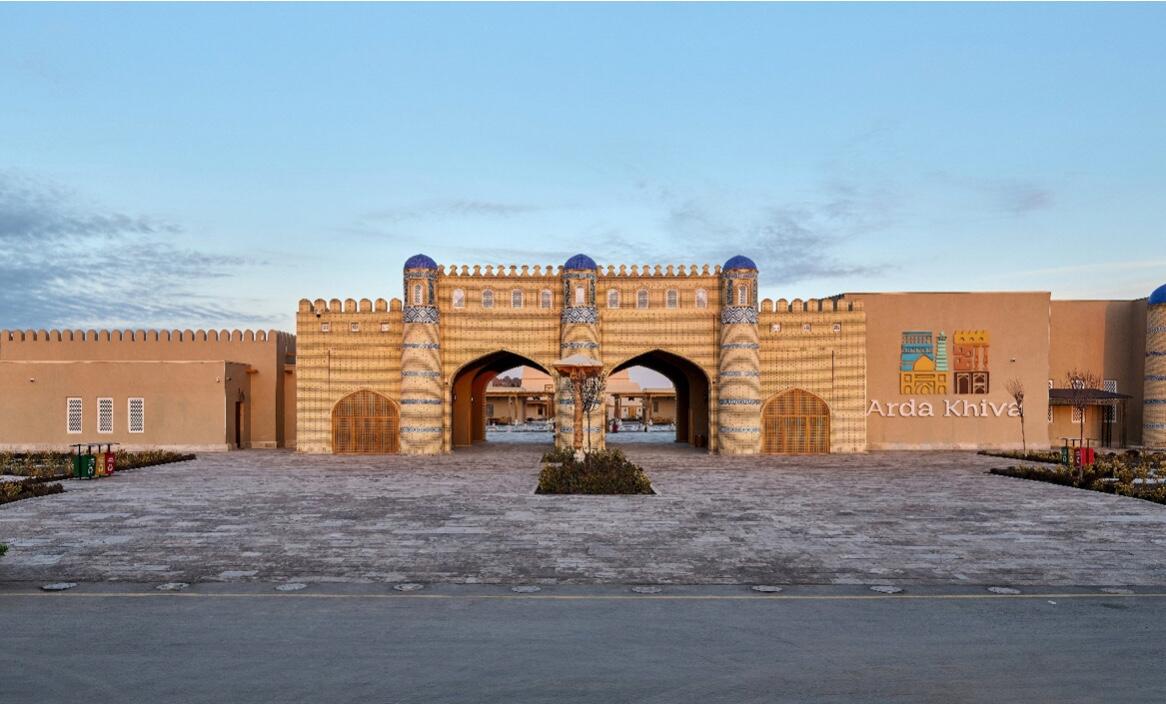
Infrastructure reforms also include the formation of tourism clusters. This is a fundamentally new approach to tourism development in Uzbekistan, whereby a fully-fledged ecosystem of tourism services is formed within a single region. A striking example is the Arda Khiva tourist complex, located near the walls of Ichan-Kala, a UNESCO World Heritage Site. The complex opened its doors to visitors in March 2026 and has become a major tourist attraction in Uzbekistan. This complex resembles a miniature version of ancient Khiva and consists of hotels of varying comfort levels (five modern hotels and 13 guesthouses with a total capacity of 1,080 beds), a theme park, and a center for "healthy entertainment." Guests also have the opportunity to visit craft workshops, participate in master classes, and sample unique Khiva dishes at local restaurants. Guests can enjoy unique spa programs, meditation, gondola rides, water activities, a museum, a cinema, concerts, and a huge musical fountain.
Sanjar Tadjiev is confident that changes in Uzbekistan's tourism landscape will stimulate demand from tourists, including those from Russia, a key market for Uzbekistan with significant growth potential. The number of Russian tourists visiting Uzbekistan in the first five months of 2026 amounted to 465,885 people, which is more than 30% higher than the figures for the same period in 2025.