Russia-UAE flight expansion: market update for winter 2026
Note: This article was initially published on July 27, 2026, but has been comprehensively rewritten on September 1 to reflect significant new developments in flight schedules, market shares, operational constraints, and tour operator block programs.
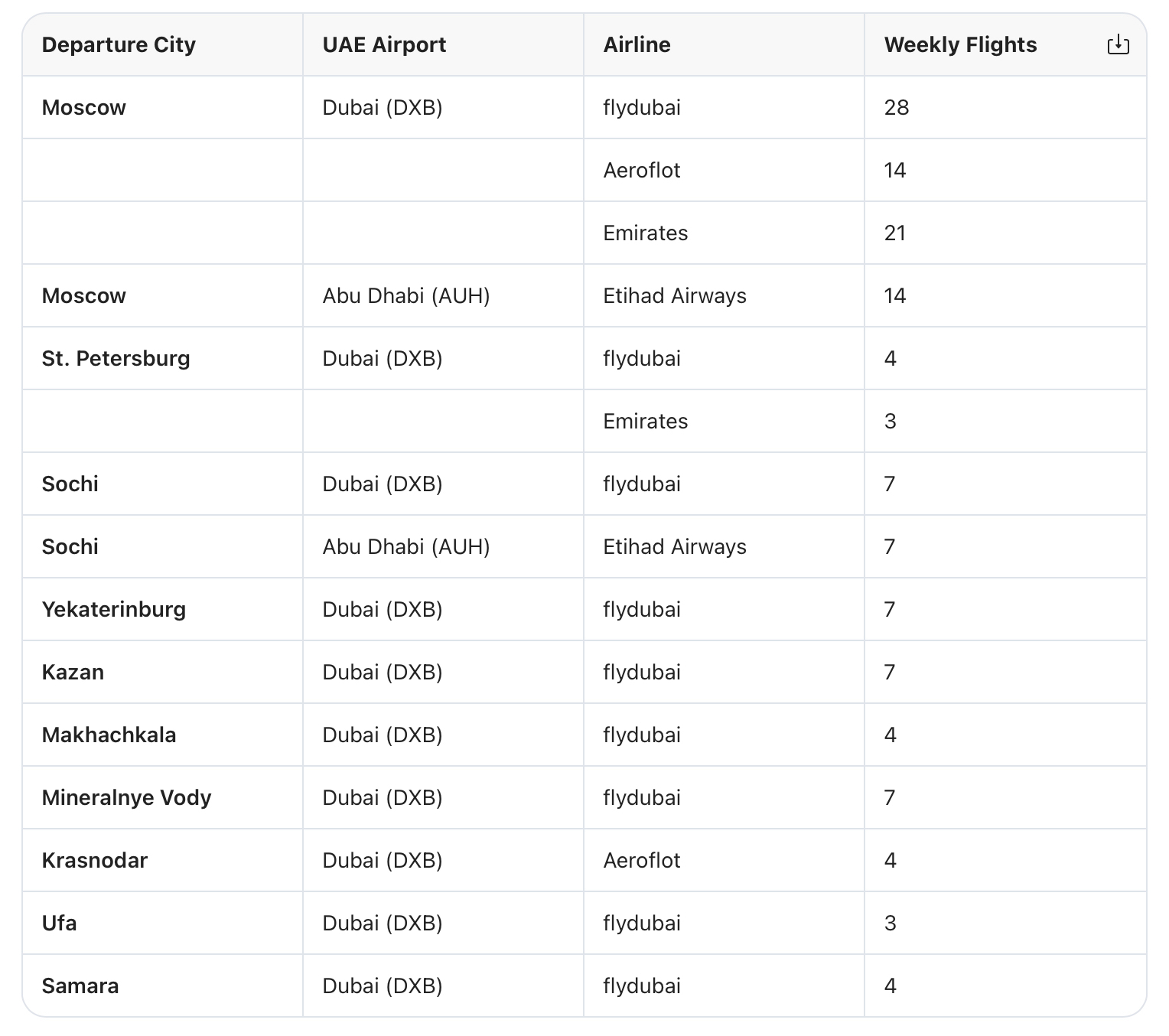
Currently, four airlines are actively serving the routes between Russia and the UAE: Aeroflot, Emirates, flydubai, and Etihad Airways. Following a significant late-summer surge, carriers now operate approximately 130–135 flights per week, with a combined weekly passenger capacity of 27,000 to 29,000 seats (up from roughly 95 flights and 18,000–22,000 seats reported in mid-summer).
The network currently connects 10 Russian cities to two primary UAE hubs: Dubai (DXB) and Abu Dhabi (AUH). Dubai remains the absolute dominant arrival point, historically capturing 92–94% of all passenger traffic on this destination. The analysis of the current and planned flights is given by ATOR.
Capacity Breakdown and Market Share
The distribution of capacity among carriers and routes is highly concentrated:
- Moscow-Dubai is the main route, accounting for roughly half of the total capacity to the UAE (14,000–15,000 seats weekly).
- Moscow-Abu Dhabi provides an additional ~4,000 seats weekly.
- All regional routes combined (St. Petersburg, Sochi, Yekaterinburg, Kazan, Makhachkala, Mineralnye Vody, Krasnodar, Samara, and Ufa) supply the remaining 9,000–10,000 seats weekly.
In terms of market share:
- Fly Dubai commands the largest share, providing 51–53% of the capacity to Dubai and about 43% of the total Russia-UAE capacity, driven by its extensive regional network and high frequency.
- Emirates secures roughly 35–37% of the Dubai-bound traffic and 30% of the total market. This strong showing is largely due to its deployment of wide-body Boeing 777 aircraft on routes from Moscow and St. Petersburg, maximizing seat capacity per flight.
- Aeroflot holds the remaining 10–14%, operating 18 weekly flights from Moscow and the newly added Krasnodar.
Detailed Flight Schedule Breakdown (Late August 2026)
Tour Operator Block Programs (2026/2027 Season)
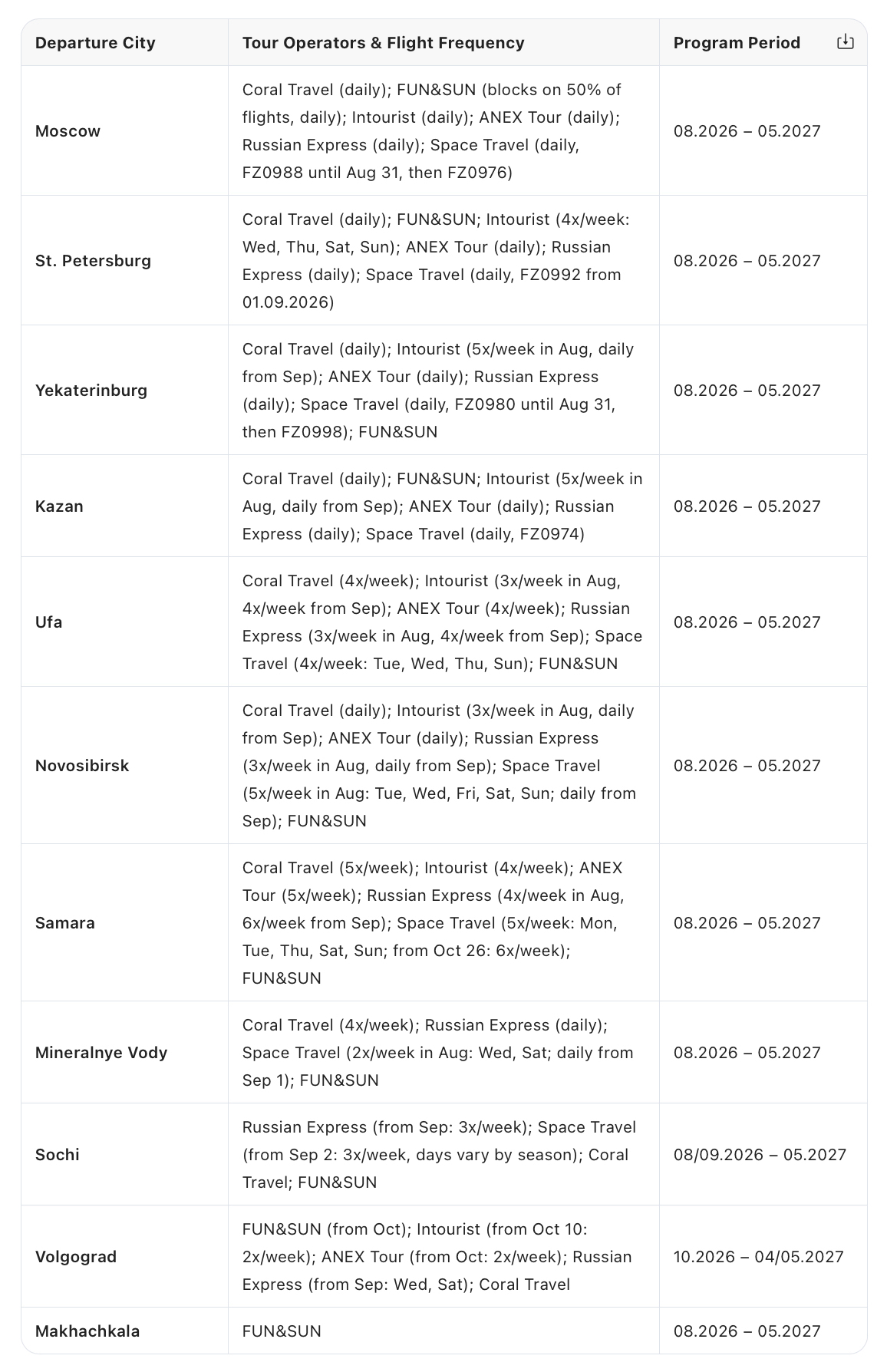
Despite market volatility, major Russian tour operators have maintained their block seat allocations. Departures to Dubai are currently available to tour operator clients from 11 cities, with programs running through the winter season and gradually expanding in frequency.
Major Setback: Ural Airlines Cancels Planned Dubai Flights
A significant blow to the anticipated autumn expansion is the sudden cancellation of Ural Airlines' planned program. The carrier was scheduled to launch 14 weekly flights between Moscow and Dubai starting September 25. However, these flights have been entirely cancelled due to the ongoing geopolitical situation in the Middle East and the reported closure of the Strait of Hormuz. The resulting flight path diversions have significantly increased distances and flight times. Ural Airlines noted that their Airbus A320 aircraft can no longer cover this extended route with a full commercial payload without an unprofitable technical stop for refueling. This cancellation abruptly wipes out an estimated 16–18% of the planned September capacity on the lucrative Moscow-Dubai route (dropping planned weekly capacity from 18,000–19,000 seats down to 15,000–16,000 seats).
October 2026 Outlook: Ambitious Plans Under a Cloud of Uncertainty
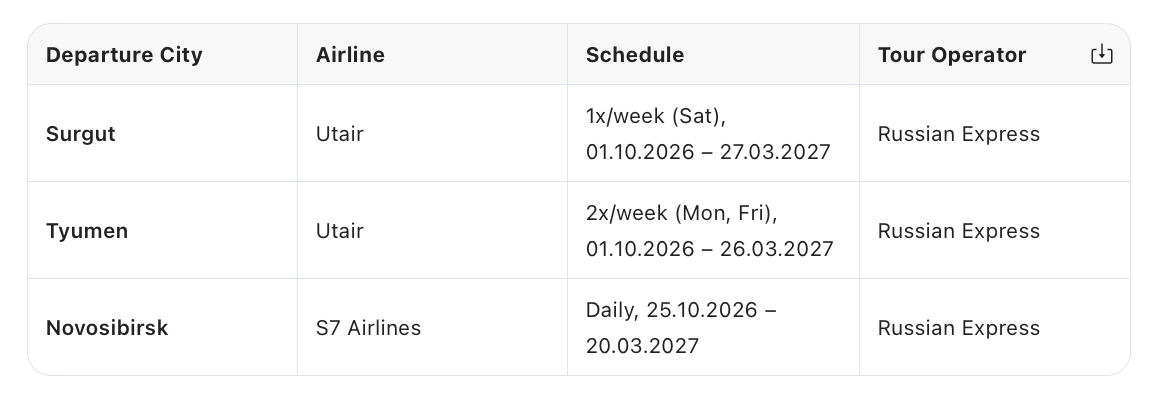
Prior to this cancellation, the route network was expected to expand massively by the end of the current summer schedule (late October 2026). Projections indicated direct flights from 14 Russian cities (adding Novosibirsk, Grozny, Surgut, Tyumen, and Volgograd) to five airports across four emirates (DXB, DWC, AUH, SHJ, and RKT).
While Ural Airlines has pulled out, other carriers' expansion plans currently remain on the books, including:
- Air Arabia: Up to four daily flights from Moscow to Sharjah, new service from Moscow to Ras Al Khaimah, and resumed regional flights from Ufa, Samara, Kazan, and Yekaterinburg.
- Etihad Airways: Launching direct flights between St. Petersburg and Abu Dhabi.
- Utair & Pobeda: Utair plans to fly to Dubai World Central (DWC) from Grozny, Tyumen, and Surgut, while Pobeda aims to serve Dubai from Ufa and Makhachkala.
- Fly Dubai: Further expanding its Sochi program to up to 16 weekly departures.
If fully realized, these additions would push the total volume to 300–320 weekly flights, potentially tripling the monthly passenger capacity to 230,000–260,000 passengers in each direction.
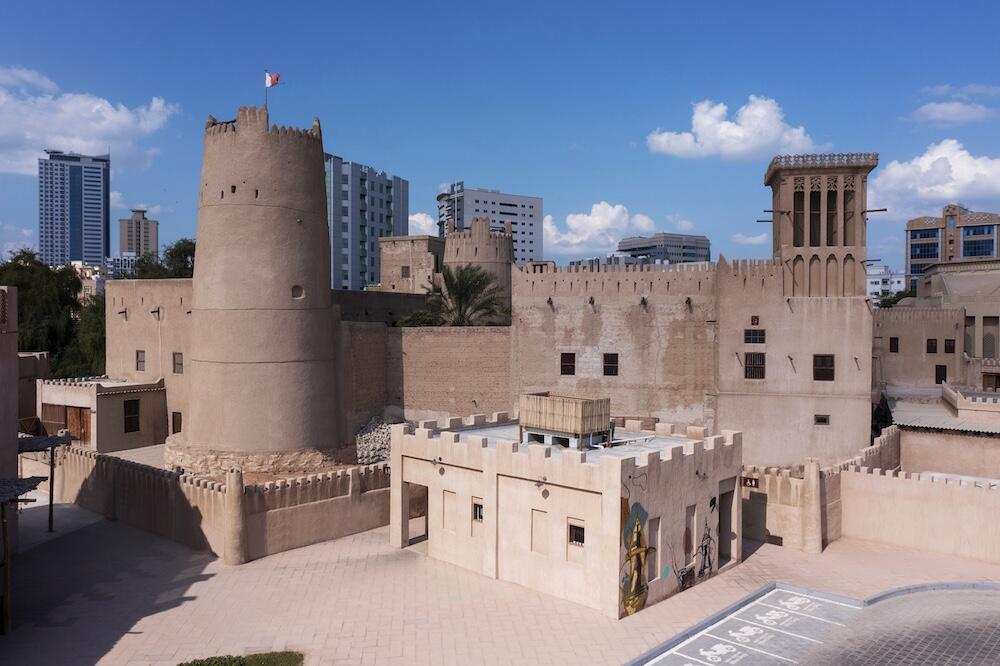
Photo of Ajman Heritage District provided by Ajman Tourism Development Department