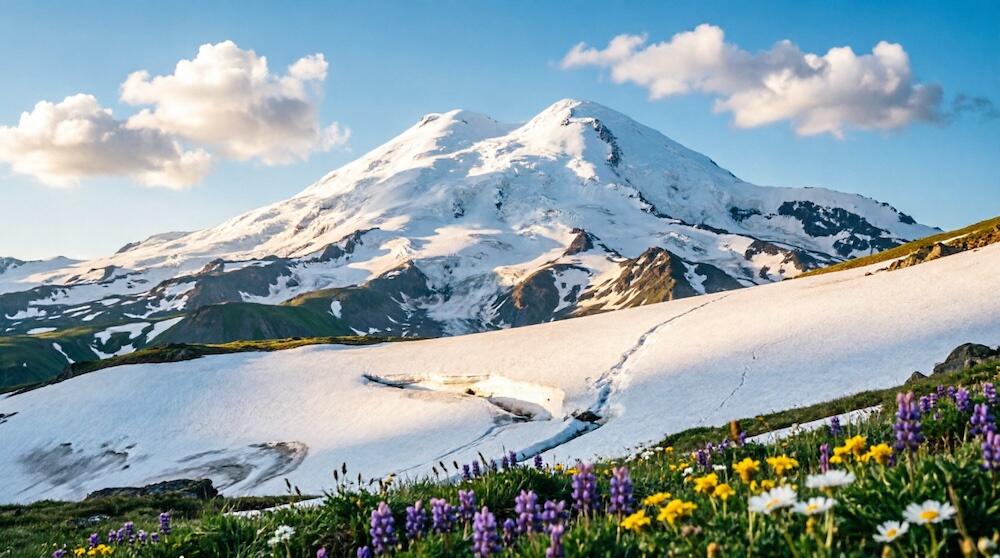
Seven climbers have died on Mount Elbrus in the past week. Five were from Bosnia and Herzegovina, two from Russia. Sergey Romashkin, Vice President of ATOR (Association of Tour Operators of Russia), points to one common factor. "In all three cases, teams went without guides at all," he said. "They relied on their own strength." Even the Bosnian group included experienced athletes, one had even climbed Elbrus before. "But that wasn't enough," Romashkin said. A full climbing program costs 50,000 ($640) to 100,000 rubles ($1280). Some people try to save money by climbing alone. Others hire a guide for just summit day.
Now, the Association of Tour Operators of Russia (ATOR) is calling for change. ATOR wants the law to require certified guides for popular mountains. The proposed rules would also set a guide-to-climber ratio. One guide for every two climbers. Groups of three would need two guides.
Elbrus is Russia's most "mass" peak. Some sources estimate the number of climbers as 10 000 — 15 000 (ATOR), some to 20 000 — 25 000 (Russian Mountaineering Federation). Among them approximately 15% are foreigners (mainly from Italy, Turkey, Germany, China, and India). About one-third never reach the top, Romashkin estimates. "Elbrus is a tricky mountain," said Albert Khadzhiev, another expert. "The weather changes instantly. A person thinks the clouds are below, and half an hour later you can't see a meter ahead. You can't even find the trodden path back. Plus the hurricane wind. People walk without knowing where they're going." Romashkin from ATOR adds: "Mobile phone signals are poor on much of the route. A satellite phone is essential. There is a small rescue hut on Elbrus's saddle at 5,300 meters. It offers shelter from bad weather or illness. But it's hard to find without local knowledge. Guides know where this shelter is, an unprepared person can just walk past it."
Another problem is sort of legal conflict. A group might pay 100,000 rubles for a program. Then, before the summit, the guide decides to turn back due to bad weather, and tourists often protest. "The guide should not make decisions thinking about financial consequences or legal claims," Romashkin said. "They should only think about people's safety." So, ATOR wants a legal change. Sergey Romashkin suggests selling a "climbing attempt" rather than a guaranteed summit. Some companies already do this. Some even offer two attempt days for weather flexibility. "The mountain is not a normal consumer service," Romashkin stressed. "You cannot guarantee reaching the summit. Life and health must always come first."
The changes would also apply to other popular routes. These include Klyuchevskaya Sopka in Kamchatka and Belukha in Altai.
A government bill about mountain tourism rules was ready in March 2026, but it has not yet been passed. Now, after these deaths, the pressure for change is growing.