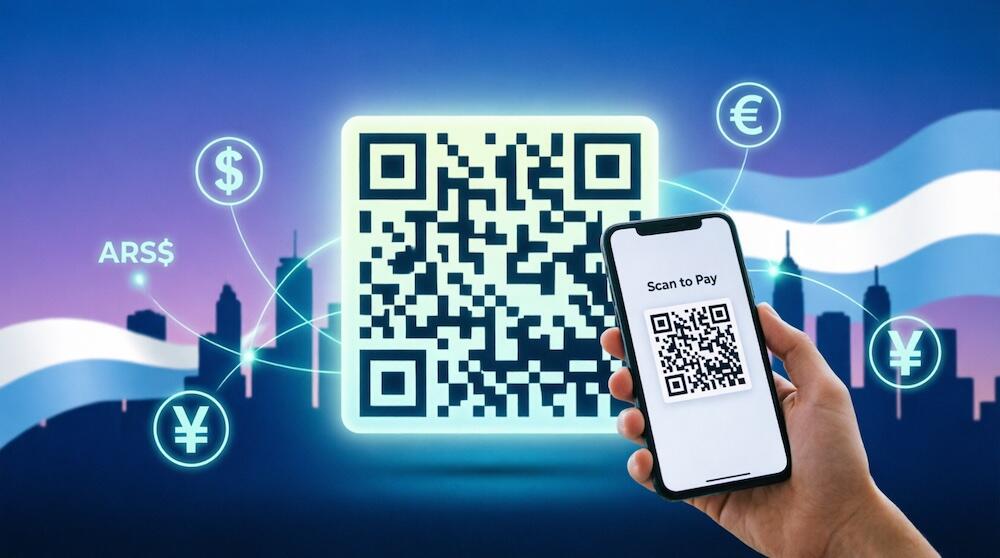
Russia's VTB Bank (PJSC), one of the country's largest financial institutions with a client base of over 39 million individuals, has launched a new service that allows its customers to pay for goods and services via QR code in Argentina. The feature is now available directly through the bank's mobile application.
When a client makes a purchase, funds are debited from their ruble account, and the bank automatically converts them into Argentine pesos at the prevailing rate, ensuring a seamless transaction experience.
"Argentina has become the first country in Latin America where we are launching QR code payments. This is one of the three most popular features among Russian tourists on the continent," said Alexei Okhorzin, Senior Vice President and Head of the Retail Business Products Department at VTB. He emphasized that VTB's technology covers virtually all QR code formats commonly found in Argentina, making it easy to use.
The bank plans to expand the service to ten destinations, including other countries in the region, by the end of 2026.
The growing demand for this payment method is evident: since the beginning of the year, VTB clients have made more than 524,000 QR payments abroad, totaling over 1.6 billion rubles (approximately $20.3 million USD). According to the bank, the most common QR purchases are groceries in supermarkets, electronics, and clothing.
Russian Travel Digest tried to comply statistics on the number of Russian tourists in Argentina over the last several years, although there is no single database recording these figures year by year. Nevertheless, several key periods can be identified to paint a general picture.
2018 — 2019: According to Argentine authorities, in 2019 the country was visited by nearly 20,000 tourists from Russia, which was 26% more than in 2018. The peak of interest occurred in 2018, likely boosted by the FIFA World Cup hosted in Russia.
2020 — 2021: The COVID‑19 pandemic and border closures dealt a severe blow to tourism. The total number of international tourists in Argentina fell by 85% in 2021 compared to 2019. The flow from Russia, like that from other countries, dropped to a minimum, although exact figures for these years are not available in open sources.
2022 — 2023: After pandemic restrictions were lifted and Western sanctions were imposed on Russia, Argentina became one of the few accessible destinations for Russians (visa‑free for up to 90 days), leading to a sharp increase in arrivals. This surge was not only about tourism but also the so‑called “birth tourism.” Figures for this period vary from 23 000 to 37 000 tourists from Russia.
2024 — 2025: According to some reports, by 2025 the “boom” of Russian arrivals had cooled significantly. Overall, tour operators noted that demand for Argentina among Russians indicates sustained but no longer explosive interest.
There are no direct flights from Russia to Argentina—every itinerary requires at least one connection via a major international hub. The main options include Turkish Airlines via Istanbul (about 18.5 hours to Buenos Aires, round‑trip per person from 65,000–80,000 RUB / ~$825–$1,015 USD), Qatar Airways via Doha and São Paulo (70,000–80,000 RUB / ~$890–$1,015), Ethiopian Airlines via Addis Ababa (often cheaper, from 90,000 RUB / ~$1,145 per person, but with long layovers), and Emirates via Dubai (premium service). To save money, some tourists consider flying out of Yerevan, Armenia (round‑trip to Buenos Aires from about 125,000 RUB / ~$1,590, plus a separate Moscow–Yerevan leg for as little as 12,000 RUB / ~ $150).