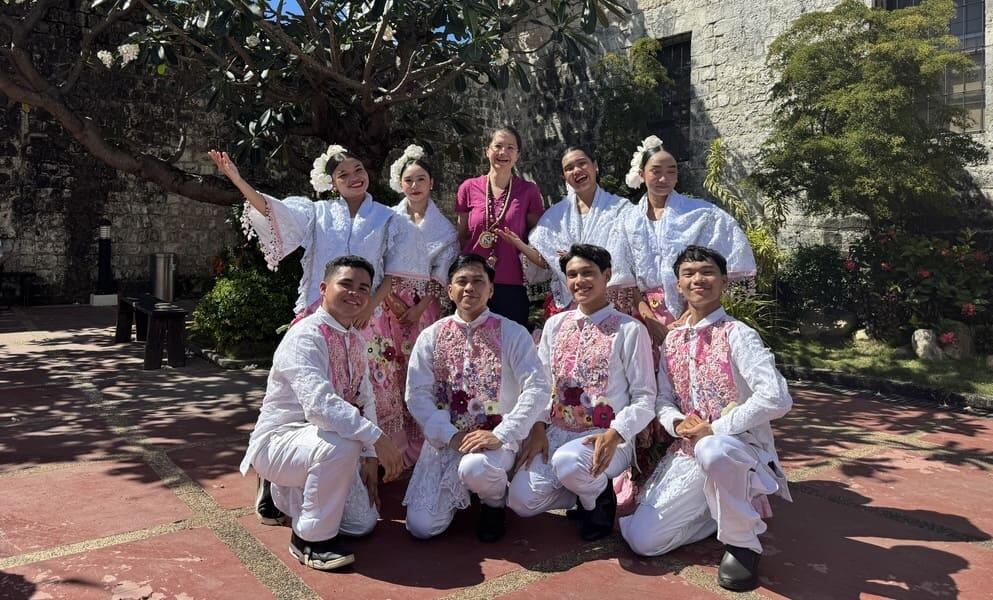
As part of the ASEAN TOURISM FORUM (ATF) 2026, a pre-tour «A Heritage Tour of Cebu» was organized for guests and media representatives on January 27. Natalia Klimenok from Russian Travel Digest shared her impressions of the journey.
Early in the morning, all tour participants gathered at the Mactan Expo Center, from where they traveled to Cebu via the CCLEX expressway, which connects Mactan and Cebu islands.
The first point of visit was one of the main attractions of Cebu - Magellan's Cross and Basilica Minore del Santo Nino.
On April 21, 1521 members of the Spanish expedition led by Ferdinand Magellan erected this Сross upon their arrival on the island of Cebu. Magellan convinced the local chieftain Rajah Humabon, his wife Queen Juana, and approximately 800 of their subjects to embrace the Catholic faith and be baptized. This event marked the beginning of the Christianization of the archipelago.
Construction of the Basilica began in 1565 under the direction of the Augustinian monk Andrés de Urdaneta. According to the legend, here was found a statue of the Infant Jesus, brought to the island by Ferdinand Magellan. It is one of the oldest religious artifacts in the Philippines and is widely revered among Filipino Catholics.
Next stop was Fort San Pedro, a military defensive structure built by the Spaniards under the command of the first governor of the Philippines, Miguel Lopez de Legazpi. The fort is located in the area now called Plaza Independencia, near the city pier. It was originally made of wood, but in the early 17th century it was rebuilt in stone to repel Muslim raids. The current structure dates back to 1738 and is the oldest triangular bastion fort in the country. It served as the core of the first Spanish settlement in the Philippines.
The National Museum of the Philippines, located near the Fort in the former Customs House, impressed with its exhibits dedicated to the history and cultural heritage of Cebu. Its galleries showcase Cebu's geological treasures, its unique flora and fauna, archaeological artifacts, Cebu's maritime and industrial history and works by renowned Filipino artists.
Lunch after intense excursions was offered at the Lighthouse Restaurant, a Filipino and Asian cuisine restaurant that has been operating since 1980. The restaurant's signature dish is the «Lighthouse Tagalog beef steak», served sizzling in a skillet. It also offers delicious scallops, fried chicken, fish and baked crab. A must-visit destination for tourists who want to taste authentic Filipino cuisine!
After lunch, we visited two museums: Casa Gorordo Museum and Museo Sugbo.
Casa Gorordo is a mansion of a wealthy Filipino family of the late 19th century, preserved in its original form, in which the museum is located. It is famous for its rich collection of artifacts, including antique furniture, antique costumes, paintings, religious relics and household items.
Museo Sugbo is one of the most visited museums on the island. There are exhibits related to the history of Cebu from the pre-colonial era to the present. Among them are archaeological finds, such as gold objects and ceramics from the ship San Diego that sank in 1600. The museum also has memorabilia related to political and presidential history.
The Philippine islands are mostly known on the Russian market as a beach destination. In fact it can be of great interest for its historical part allowing to understand the modern country.
***
The Philippines is not a mass destination for Russian tourists, but it has a loyal audience that grows year after year. According to the Philippines Department of Tourism, 17,842 Russian citizens entered the country from January to July 2025 making a 15.8% increase compared to the same months in 2024 (15,413).
#ATFPhilippines2026
#VisitSEAsia